The limits of planning and control
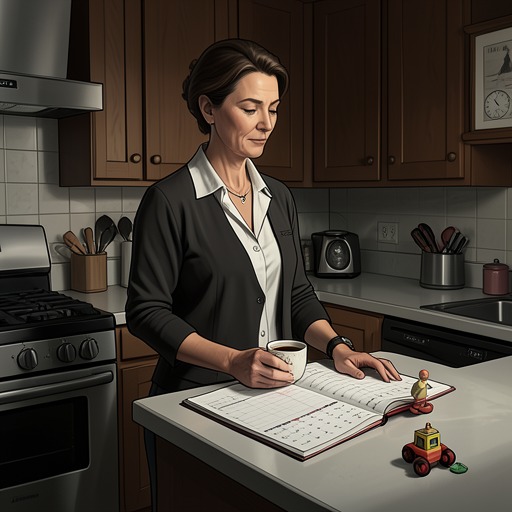
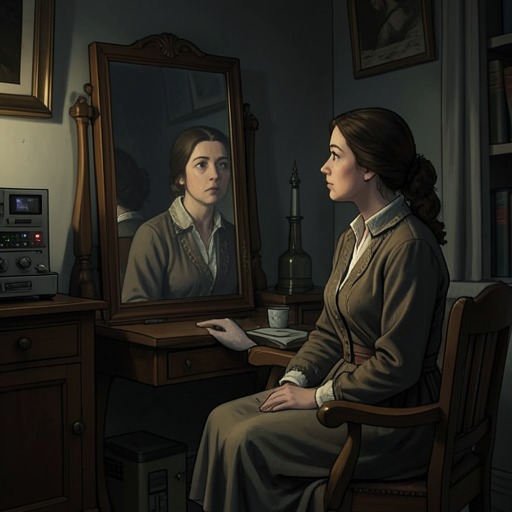
The GodmotherThe novel’s treatment of the limits of planning and control follows Rachel Elliot as she tries to make life answer a series of deliberate decisions. She approaches motherhood as a goal she can pursue, love as a future she can secure, and work as a problem she can solve by changing jobs. Yet age, fertility, other people’s wishes, and the consequences of her own choices resist that managerial logic. The point is not that planning is useless, but that a plan cannot guarantee either the feelings or the outcome it is meant to produce.
Making motherhood into a plan
Rachel’s decision to have a child first appears in her diary as a sentence she has been reluctant to commit to the page. The hesitation matters: writing makes a private possibility concrete, and her decision feels too large to record casually. She soon asks Nathan Kramer to help her conceive, presenting the request as a limited arrangement. She says she wants to become a mother soon, but proposes that he provide only the means of conception, with no subsequent financial or parental responsibility. Her offer of putting the agreement in writing turns an emotionally consequential choice into something she hopes can be defined in advance.
The request exposes both Rachel’s agency and the limits of the control she imagines. She has made up her mind about becoming a mother, but she cannot make Nathan receive the proposal as a purely practical transaction. He initially mistakes it for news that she is already pregnant; Rachel has to clarify that she is asking for the act of conception, not announcing an outcome. Her assurances that she will manage alone are meant to contain the future, but they cannot make the decision emotionally neutral for either of them. The episode establishes the central distinction: Rachel can choose what to ask for, but not dictate what that choice will mean to another person.
Love, secrecy, and the body
When Rachel and Robbie Dexter rekindle their relationship, the prospect of a shared future makes her private plan feel newly plausible. During sex, she secretly removes her contraceptive cap after a moment of hesitation, telling herself that time matters because she is nearly forty and that she could cope alone if the relationship failed. She hides the cap in her vanity case and keeps the decision from Robbie. The concealment gives her an apparent way to join two desired futures—love with Robbie and motherhood—without first negotiating their relationship openly.
That strategy also distorts her understanding of Robbie. She has not told him that they are having unprotected sex or that pregnancy is part of her intention. Later, she recognizes that she has been treating a hoped-for future as if it were already secure, and that her desire to conceive may be entangled with anxiety about approaching forty and being alone. Robbie’s qualities as a loving partner and would-be father do not make the future Rachel has imagined inevitable. Her private effort to use conception to settle uncertainty instead puts his life and choices inside a plan he has not knowingly accepted.
Evidence that resists certainty
A pregnancy article Rachel reads while injured gives the abstract question of control a more physical and practical dimension. Its accounts of couples facing infertility treatments, low chances of success, and considerable expense make her compare their longing with her own. She concludes that she would not subject herself to repeated clinical treatment and questions whether she wants a child enough to bear that process. The article shifts her attention from motherhood as an idea that might provide direction to the material uncertainty of conception and the demands that pursuing it could entail.
Its closing argument challenges the assumption that people can program their bodies as they please: biological, chemical, and psychological processes may resist control. Rachel has been relying on timing, intention, and a belief that pregnancy might make the rest of her life fall into place. Faced with the article’s account of fertility and treatment, she sees that neither conception nor the meaning she assigns to it can be commanded. Her doubts do not amount to a settled rejection of motherhood; rather, they expose how little certainty her plan can provide.
The costs of trying to manage other people
Rachel’s reassessment of her future with Robbie brings the personal cost of overplanning into view. As he tends to her while she is injured, she understands that she has mistaken the future she wanted for one they had mutually built. She sees her imagined rural life as a fiction shaped by her own need for direction, not a reliable account of Robbie’s needs or of their relationship. Her recognition that feelings cannot be manufactured by willpower applies to love as well as conception: wanting an outcome intensely cannot make it emotionally true.
The same broader vulnerability appears in Rachel’s professional life. After Cliff Weybourne assaults her, she reports what happened to Alan Jarvis. In the meeting with Cliff, Alan recasts the account as a misunderstanding and urges the two to put it behind them. Rachel cannot make the workplace respond fairly simply by stating the facts. She resigns, telling Alan that he should have supported her when she first came to him. The episode is not a fertility decision, but it sharpens the novel’s contrast between personal intention and the structures that shape what a person can actually secure. Leaving the job is a choice Rachel can make; it does not undo the failure of institutional support.
An uncertain future
Rachel’s later encounter with Will Raphael brings the limits of her original plan into sharp focus. Will reveals that he cannot have children because he was born without a vas deferens, a condition he learned about during his marriage to Ginnie. The disclosure means that the attraction Rachel feels cannot simply be folded into her earlier hope of becoming a mother with a partner. Will’s infertility is not a puzzle she can solve by deciding harder, and the revelation complicates any easy equation between romantic possibility and parenthood.
Rachel tells Will that feelings cannot simply be switched on or off, then moves to leave; he kisses her and asks whether it is okay. The scene offers an opening between them without resolving what they will become. At the close, Rachel tells Will that the telephone is engaged, though she knows this is not true, and reflects that fate sometimes needs a hand. That small act does not restore the fantasy that life can be fully arranged. It suggests a narrower possibility: people may make choices within uncertainty, but they cannot guarantee in advance what those choices will produce. The novel’s theme rests in that tension between deliberate action and outcomes that remain beyond anyone’s complete control.